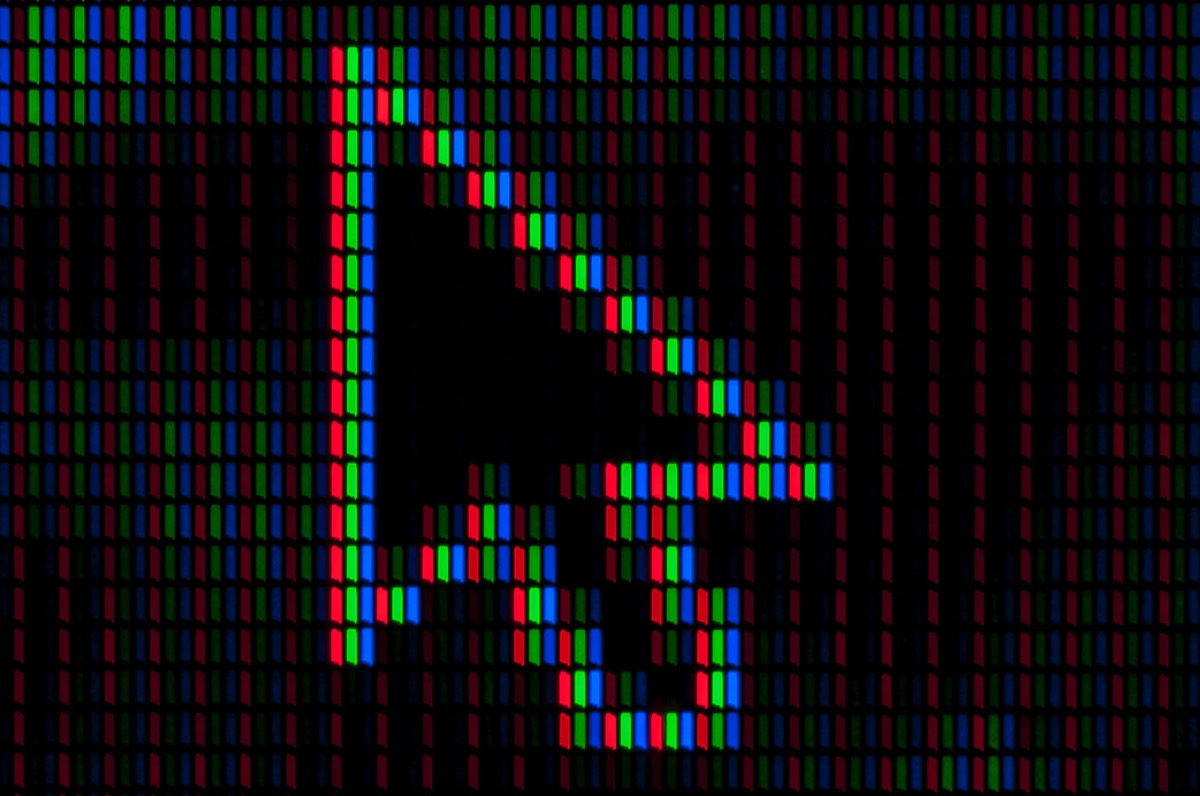
If the mouse pointer vanishes only while it is over the Chrome window, restart Chrome to get it back: type chrome://restart in the address bar and press Enter. If it keeps happening, turn off graphics acceleration in Chrome’s settings and update your graphics driver. The steps below are for Chrome on Windows and Mac.
First, rule out normal behavior
- Full-screen video. Video players usually hide the pointer while a video plays in full screen. Move the mouse and it comes back.
- Typing on Windows. Windows has an option that hides the pointer while you type. On Windows 11, open Settings → Bluetooth & devices → Mouse → Additional mouse settings, go to the Pointer Options tab and clear Hide pointer while typing. On Windows 10 the path starts with Settings → Devices → Mouse → Additional mouse options.
- The pointer is gone in other apps too. Then Chrome is not the cause. Check the mouse battery or cable, try another USB port, and restart the computer.
Get the pointer back now
You can restart Chrome with the keyboard alone.
- If you typed text into a form on a page, copy it somewhere safe first. It may not survive the restart.
- Press Ctrl + L on Windows or Command + L on Mac to jump to the address bar.
- Type chrome://restart and press Enter.
Chrome closes and opens again with the same tabs. If Chrome does not react at all, force it to close:
- Windows: press Ctrl + Alt + Delete and choose Task Manager. Select Google Chrome and click End task.
- Mac: press Option + Command + Esc, select Google Chrome and click Force Quit.
Open Chrome again and press Ctrl + Shift + T (Command + Shift + T on Mac) to reopen the tabs you had.
Turn off graphics acceleration
A pointer that goes missing only inside Chrome points to the way Chrome draws its window. Chrome uses the graphics processor for that. Google lists turning this feature off as the fix when Chrome and the computer’s hardware do not work well together.
- Click the three-dot menu at the top right and choose Settings.
- Click System.
- Turn off Use graphics acceleration when available. Older versions of Chrome call it “Use hardware acceleration when available”.
- Restart Chrome with the relaunch button that appears next to the setting.
With acceleration off, the processor does the drawing instead of the graphics chip, so pages with video and animation can feel slower. Treat it as a workaround. After you update Chrome and the graphics driver, turn it back on and see if the pointer stays.
Update Chrome and the graphics driver
- Chrome: click the three-dot menu and choose Help → About Google Chrome. If you see Relaunch, click it.
- Windows: open Settings → Windows Update and click Check for updates. Microsoft delivers most driver updates this way. To update the driver by hand, right-click the Start button, open Device Manager, expand Display adapters, right-click your graphics card and choose Update driver.
- Mac (macOS 13 or later): open System Settings → General → Software Update and install the available updates.
Check your extensions
An extension that changes how pages look can also change or hide the pointer. Open a page in an Incognito window (three-dot menu, then New Incognito window). Extensions do not run there unless you allowed them to. If the pointer behaves in Incognito, open Extensions → Manage extensions from the three-dot menu and switch your extensions off one at a time.
Make the pointer easier to find
- Windows: in the same Pointer Options tab as above, select Show location of pointer when I press the CTRL key. Windows then circles the pointer when you press Ctrl. Microsoft describes all options on its page about mouse settings.
- Mac: open System Settings → Accessibility → Display and go to Pointer. Turn on Shake mouse pointer to locate or make the pointer larger. Apple’s guide: Make the pointer easier to see on Mac.
A note on our browser
Kingpin, our private browser for Mac, uses the same engine as Chrome. We do not claim it is free of display glitches like this one, and it will not fix a problem with a graphics driver.